I’m With the Band

Paul McCartney: Man on the Run

by George Wolf

A seasoned filmmaker like Morgan Neville is smart enough to know that with Paul McCartney as your documentary subject, you gotta pick a lane and focus.

For Man of the Run, Neville picks a good one: how on Earth do you approach following up your stint in the most culturally significant band of all time?

Think about it. If you count Pete Best (first drummer), plus Stu Sutcliffe (original bassist) and even Jimmy Nicol (temporary tour replacement for a sick Ringo), they’ve been only seven souls in history who faced life as a “former Beatle.”

And McCartney is the most commercially successful, by far. Man on the Run takes us inside Paul’s strategy for that second act.

Neville (Won’t You Be My Neighbor?, Piece by Piece, Steve! and the Oscar-winning 20 Feet From Stardom) keeps mainly to the ten year period after Paul’s first solo album in 1970 officially signaled the end of the Beatles. Using archival photos, videos, interview clips and animation, Neville plays with an engaging audio/visual style that often mirrors a mixed-media scrapbook.

He also keeps a tight reign on the time stamp, limiting more recent interview clips (from Mick Jagger, Chrissie Hynde, Paul’s adult kids and others) to audio only, so as not to break the immersive spell that keeps us close to McCartney’s head space at the time.

And we hear and see much from the man himself. His thoughts on forming Wings with first wife Linda are endearing and self-reflective. He was seeking to combat his crushing fame by surrounding himself with bandmates, but couldn’t completely quell the ego and drive that made many of them feel like mere sidemen.

Home movies from down on his farm are warm and loving, much like the sentiments on John Lennon and some very early days with the Fab Four.

And you’ll probably learn a thing or two you didn’t know about the infamous pot bust in Japan.

But above all, Man on the Run succeeds in its mission to reconsider an important decade in the life of an icon. We see a man seeking a new kind of contentment at home and on the run, making music that only became more impactful and influential as the bands played on.

In theaters 2/19 and on Prime Video 2/27.

The Oscar Nominated Animated Shorts

by Hope Madden

The 2026 program of Oscar nominated animated shorts is characteristically brilliant. Artistic styles range from brushstrokes to stop motion to simple, hand-drawn animation and the tales told run an even wider gamut. Gorgeous, heartwarming, clever and endlessly watchable, the shorts celebrate the boundless talent and creativity in human artistry.

The Three Sisters

14 minutes, directed by Konstantin Bonzit

Konstantin Bonzit enlists spare but effective animation and no dialog at all to tell the most uproarious and delightful film of the lot. Three sisters life side by side by side on a tiny island until one day, a sole sailor docks looking for a place to stay. It’s a clever bit of fun, slyly told.

Forevergreen

13 minutes/ directed by Nathan Englehardt and Jeremy Spears

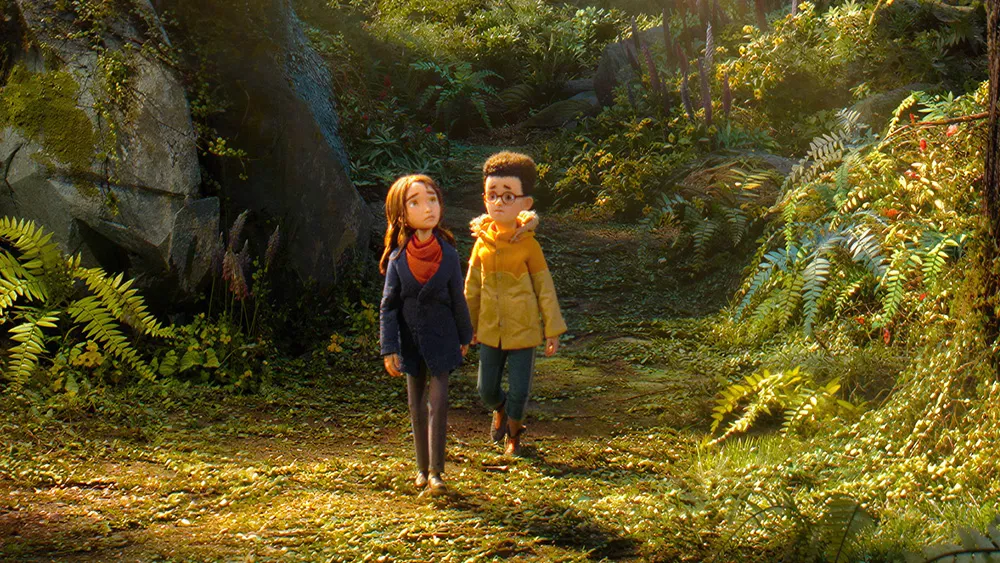
Stirring, gorgeous, dear, clever, joyous, heartbreaking, funny—Evergreen delivers it all, and in just 13 minutes. The story follows an orphaned bear cub who finds shelter and safety in the limbs of a loving evergreen tree. The animation is stunning, as is the film’s ability to draw so much emotion.

Retirement Plan

7 minutes, directed by John Kelly

Co-writer/director John Kelly (scripting with Tara Lawall) animates a clever, witty, delightful wish list from an unprepared middle-aged man (voiced to perfection by Domhnall Gleeson) listing all the things he will do once he’s retired and has the time. An utter joy.

Butterfly (Papillon)

15 minutes, directed by Florence Miailhe

The brushstroke painting technique Miailhe uses is such a perfect medium for this tale of the water. The animation flows and moves, as Alfred Nakache’s life swims before our eyes. His youth, afraid of the water. His adolescence, a remarkable swimmer. His young adulthood, an Algerian-born Jewish Olympian in 1936’s German games. Memories of love, loss, and survival, all told from the water, leave a stirring impression.

The Girl Who Cried Pearls

17 minutes; directed by Chris Lavis and Maciek Szczerbowski

This enchanting, almost spooky stop-motion tale sees a wealthy grandfather spinning the tale of his most precious possession to his curious granddaughter. His tale is of his youth of poverty, his love for a sorrowful girl, and the tears of pearls that she shed. The unforgettable animation and Colm Feore’s beautiful voicework make this an unforgettable fable.

The Oscar Nominated Short Films are presented in three separate feature-length programs (Live Action, Animated, Documentary) at theaters beginning this weekend.

The Oscar Nominated Documentary Shorts

by Rachel Willis

This year’s collection of Oscar-nominated documentary shorts offers a mix of subjects, but each film displays a wealth of passion and talent.

Perfectly a Strangeness

15 minutes. Directed by Alison McAlpine.

As first light breaks on the horizon, three donkeys wander into the frame. These companionate creatures continue to roam as the camera follows them. Additional animals pop up on screen as the donkeys wander. A wary fox contemplates running but ultimately stands its ground. As the donkeys come upon an observatory, the mechanics of human ingenuity are juxtaposed with the donkeys’ simple rambling. This short is a serene, lovely piece of filmmaking.

The Devil Is Busy

31 minutes. Directed by Christalyn Hampton and Geeta Gandbhir.

At an abortion clinic in Atlanta, GA, the first person to arrive is the head of security. The protestors aren’t far behind. A man with a bullhorn belts out condemnation for abortion seekers before the sun has even risen. The short makes clear from the beginning the dangers the staff at the clinic face every day. It’s an appalling situation that the women seeking care find themselves in, as it is for the men and women who seek to serve them. “This is health care, period.” It’s a powerful testimony to the providers of women’s care.

Armed with Only a Camera: The Life and Death of Brent Renaud

37 minutes. Directed by Brent Renaud and Craig Renaud.

Brent Renaud and his brother Craig spent their adult lives documenting some of the world’s most dangerous places. From war torn neighborhoods to families hiding from gangs, the brothers captured the stories of people whose lives were upended by violence. The film does not shy away from brutal realities, often choosing to show very graphic and gruesome footage. When Brent is killed covering the war in Ukraine, Craig seeks to tell his brother’s story in the way he thinks Brent would have wanted. While at its heart, the film is a tribute from one brother to another, it’s also a testament to the importance and power of journalists.  

All the Empty Rooms

34 minutes. Directed by Joshua Seftel.

Steve Hartman began reporting on school shootings in the United States in 1997. With each incident, he realized people were moving on more and more quickly. How could he do things differently, to keep people from accepting what’s unacceptable? Hartman refocused his efforts by visiting the bedrooms of the children who were taken too soon. Photographer Lou Bopp assists Hartman by trying to capture the souls of the children whose bedrooms he visits. It’s a profoundly moving effort, and director Joshua Seftel captures the final three visits with tenderness and compassion.

Children No More: Were and Are Gone

36 minutes. Directed by Hilla Medalia.

Every Saturday in Tel Aviv, Israel, a group of activists stand vigil, each displaying the photo of a child killed in the war in Gaza (children killed in Israel and the West Bank are included, too). The demonstrators don’t always agree on the best way forward, but their dedication is undeniable. Watching some of the hate directed their way is almost too hard to bear. But the importance of these quiet vigils is depicted vividly in Medalia’s extraordinary short film.

The Oscar Nominated Short Films are presented in three separate feature-length programs (Live Action, Animated, Documentary) at theaters beginning this weekend.

Fright Club: Heartbroken Horror

We’re looking at heartbreak in horror for Valentine’s Day! Not unrequited love turned to stalkerism, because that’s been done to death and it’s not romantic. But the heartbreak and longing of love and loneliness. And blood.

5. The Fly (1986)

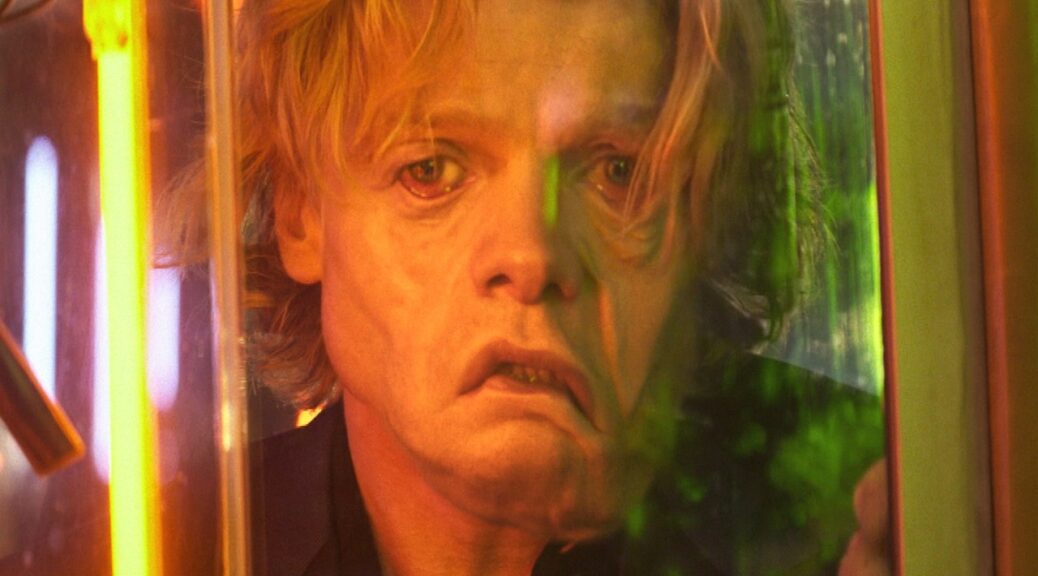
It was not just David Cronenberg’s disturbed genius for images and ideas that madeThe Fly fly. It was the performance he drew from Jeff Goldblum.

Goldblum is an absolute gift to this film, so endearing in his pre-Brundlefly nerdiness. He’s the picture’s heartbeat, and it’s more than the fact that we like his character so much. The actor also performs heroically under all those prosthetics.

He and Geena Davis make the perfect pair, with their matching height and mullets, and their onscreen chemistry does give the film a level of human drama traditionally lacking from the Cronenberg canon. You root for Seth, and your heart breaks for him too.

4. Candyman (1992)

Has it really been Helen all along? Was she once, long ago, Daniel Robitaille’s forbidden lover? The reason for his suffering and murder?

Tony Todd makes Candyman a seductive, heartbroken phantasm with no choice but to shed blood to continue to exist. When he whispers to Helen, “Be my victim,” how could she say no?

3. Bram Stoker’s Dracula (1992)

Francis Ford Coppola and screenwriter James V. Hart mined Stoker’s text for as much romance and heartbreak as they could find, and if it wasn’t there, they made it up. The Count pines for his tragically lost love, crossing oceans of time for her. That, of course, leaves poor Jonathan heartbroken. But wait, there’s more! Because Lucy chooses Arthur, leaving Quincy and Dr. Jack both heartbroken, and then breaks Arthur’s heart with her own tragic death.

Coppola’s is the hottest, most gorgeous and heartbroken version of the ancient bloodsucker’s story you’re likely to find.

2. Guillermo del Toro’s Frankenstein

Guillermo del Toro is a big ol’ softy. In many ways, that’s what makes Frankenstein a perfect property for him. His heart has always been with the monster, so why not tell the most heartbreaking and terrifying monster story?

Oscar Isaac is a marvel of angry arrogance made humble. As his creature, the long and limby Jacob Elordi offers a monster who’s more sensitive son than wounded manchild. The creature’s heartbreaking relationship with the eternally misunderstood Elizabeth (Mia Goth) is so full of tenderness and longing that the inevitable heartbreak crushes.

You don’t wander into a Guillermo del Toro film expecting less anything than glorious excess—another reason why Frankenstein and he were meant for one another.

1. May (2002)

Oh, May. Oh, Angela Bettis. No one – not even Sissy Spacek – captured the crushing awkwardness of trying to fit in when you are, deep down, cripplingly odd as well as Bettis.

Her May aches for a friend. Maybe even a lover? She has some heartbreaking trouble finding that in Adam (Jeremy Sisto) and Polly (Anna Faris – brilliant). But if you can’t find a friend, you might just have to make one.

Bettis’s performance is all awkward pauses, embarrassing gestures and longing. It’s beautiful, tender, sweet and – eventually – forgivably bloody. We love May.

The Oscar Nominated Live Action Shorts

by George Wolf

A nice mix of variety in this year’s live action nominees. You’ll find social commentary, cheeky parody, surprising comedy, warm humanity and a bitter cold look at the near future. As is the case every Oscar season, don’t miss the chance to catch the live action program on the big screen while you can.

The Singers

United States 18 mins. Director: Sam A. Davis Writer: Based on Ivan Turgenev short story from 1850

You’ve probably been to some bars that have dollar bills stapled all over the walls, right? Well, in this smoke-filled dive, one of those bills is C-note, and pestering from one bothersome barfly leads the bartender to set up a competition.

The best singer in the room gets free beer, plus that one hundred dollar bill! Surprises ensue.

The Singers is a completely delightful talent show that you wish would go on a bit longer than its 18 quick minutes.

A Friend of Dorothy

United Kingdom 21 mins. Writer/director: Lee Knight

An estate trustee (Stephen Fry) is ready to read the will of Dorothy (Miriam Margolyes) to two young men. Dorothy’s grandson Scott (Oscar Lloyd) is expecting a nice payout, and he doesn’t know why JJ (Alistair Nwachukwu) has also been invited.

Through flashbacks, we see the tender friendship that developed after JJ accidentally kicked a soccer ball into the 87 year-old widow’s garden.

The title may give you a clue about the lessons learned, and A Friend of Dorothy becomes a gently accessible reminder about kindness in a cruel world.

Butcher’s Stain

Israel 26 mins. Writer/director: Meyer Levinson-Blount

Samir (Omar Sameer) is a quiet, hard-working butcher in an Israeli grocery. He’s a talented and well-liked employee, but Samir’s manager (Rona Toledo) tells him there is a problem.

Someone has been tearing down the posters of Israeli hostages that hang in the break room. Another employee has reported that Samir is to blame.

In less than thirty minutes, filmmaker Meyer Levinson-Blount (who also plays a small role) crafts a timely and well-earned message about suspicion and rushes to judgment when complex issues are reduced to hot takes and social posts.

Two People Exchanging Saliva

France/U.S. 36mins. Writers/directors: Natalie Musteata and Alexandre Singh

Led by the perfectly detached narration from Vicky Kreips, we’re invited into a high-end department store in a strange, near-future world. Here, purchases are paid for with slaps across the face, and overall affection (specifically, kissing) is forbidden.

Through the strange attraction that develops between the well-to-do Angine (Zar Amir Ebrahimi) and a rookie salesgirl (Luana Bajrami), filmmakers Natalie Musteata and Alexandre craft an intoxicating take on class, intimacy, pleasure and risk.

This is probably the Oscar favorite.

Jane Austen’s Period Drama

United States 13 mins. Writers/directors: Julia Aks and Steve Pinder

With names like Mr. Dickley, Vagianna, Mrs. Bitts and Dr. Bangley, you can quickly guess where this parody of suppressed ribaldry and sexual ignorance is headed.

In 1800s England, Estrogenia Talbot (co-writer/co-director Julia Aks) is finally getting her long-awaited marriage proposal from Mr. Dickley (Ta’imua), when this Period Drama drops a dramatic period. Dickley mistakes the blood for a serious injury to Estrogenia, and the cheeky sendup of Austen is off and winking.

It’s more amusing than outright hilarious, but Austen fans should especially appreciate a sendup that respectfully pokes fun at some classics.

The Oscar Nominated Short Films are presented in three separate feature-length programs (Live Action, Animated, Documentary) at theaters beginning this weekend.

Must Be the Season

The Last Sacrifice

by Hope Madden

Documentarian Rupert Russell has a pretty wild tale to tell, one set in an isolated British community where outsiders aren’t wanted, information is hard to come by, and something sinister waits in the fields.

And if that sounds like every British folk horror film from The Wicker Man in 1973 to Kill List in 2011, there’s a reason. Russell tracks the birth of British folk horror cinema to one specific moment and place in time: Cotswold District, Gloucestershire, England, Valentine’s Day, 1945.

On that day in that hamlet—an isolated farming community of about 200 people—Charles Walton was found dead, a pitchfork in his face and throat, a billhook in his neck. The murder shook the nation, its description taking on wild details over the retellings: a cross carved in his chest, dead frogs all around him. The crime so enthralled England that its most prized Scotland Yard detective, Robert Fabian, came to Cotswold to investigate.

What he found was a community unwilling to cooperate in the investigation, and the Rollright Stones, enormous ancient stones said to be what remains of an Iron Age King and his soldiers after a witch’s curse.

This is all fascinating enough, but Russell goes on to explore the genuine British witchcraft phenomenon of the Sixties and Seventies, and even brings in a Teletubby. What’s wildest about this documentary is the way that the old films—including the campiest Hammer greats The Devil Rides Out, The Witches, and Dracula A.D. 1972—are based directly from documentary footage of official witch rituals of the time.

The campier and more ridiculous the scene, the more exactly it recreates rituals celebrated by Alex Sanders, the era’s self-proclaimed King of the Witches.

Except that, of course, Sanders and his followers were harmless, and Hammer’s witches rarely were. But Sanders’s incredible popularity sparked new interest in the Cotswold murder and a whole, very British film genre was born.

The Last Sacrifice is sometimes clunky in its true crime format. It’s trying too hard to be scary. The approach doesn’t always suit the material, because the wild cinematic crossover with nonfiction is exponentially more interesting, and no crime was committed there. The information is revelatory for horror film fanatics, jaw-dropping, even. And certain details are downright funny.

Russell’s sometimes wobbly approach to the doc is hardly a reason to skip it. If you have any interest in British folk horror, The Last Sacrifice is a fascinating must-watch. (Give yourself the gift of a double feature, with Kier-La Janisse’s 2021 doc Woodlands Dark and Days Bewitched, also on Shudder.)

Screening Room: Wuthering Heights, Crime 101, Good Luck Have Fun Don’t Die, GOAT

Hope & George review this week’s new releases: Wuthering Heights, Crime 101, Good Luck Have Fun Don’t Die, GOAT, The Mortuary Assistant, Honey Bunch, Sweetness, and Misdirection

How’s Your Bodice? Ripped?

“Wuthering Heights”

by Hope Madden

Remember when people saw the teaser trailer for Emerald Fennell’s “Wuthering Heights” and lost their minds? Everybody assumed Fennell had gotten in there and gone all Saltburn on the classic.

She sure did. Boy howdy, did she.

But let’s be honest, it’s a weird book about meanness and obsession and borderline incest and then outright incest. Plus, if you want a tame version there are about 100 other adaptations you can find. Let Fennell be Fennell.

Because she does it so well!

The film is gorgeous, and I don’t just mean the cast. Although there’s that. Margot Robbie is truly excellent as Cathy, spoiled and vulnerable and cruel and selfish to the core but consistently cheery about it.

And who smolders as well as Jacob Elordi? As Heathcliff, he’s first a scruffy, sad boy full of longing and later, a handsome sad man full of longing. This is absolutely Robbie’s show, but he offers very solid support and their chemistry is undeniable.

Hong Chau, fantastic as always, brings some bite and depth to a character who’s often a bit of a martyred throwaway. Likewise, Alison Oliver is a wild surprise as Isabella.

Fennell, credited with the screenplay, streamlines Emily Brontë’s epic, losing and combining characters wisely and essentially ending the film at the book’s halfway point. It feels very much like the story a teenage girl might have wished Brontë had written, but Fennell has the talent and the cast to make a really good movie out of what is essentially fan fiction.

The result is a dazzling, horny sight to see. The costumes, set design, framing, photography—all of it delivers a lush spectacle of the kind we now expect from the Saltburn director.

Wuthering Heights purists might scoff and Emily Brontë might blush, but for the rest of us, it’s hard to be mad at Emerald Fennell’s latest confection.

Diamond Life

Crime 101

by George Wolf

I saw the fairly generic title, I saw the February release date, I saw the two hour and twenty minute run time, and I was less than excited about Crime 101.

Let me tell you how quickly it proved me wrong.

Writer/director Bart Layton and a cracking ensemble put a stylish, character-driven sheen on some familiar crime thriller tropes. What results is a tense and twisty ride that taps into a healthy amount of world weary anxiety.

Chris Hemsworth is Mike, a controlled and elusive master thief, dealing in diamonds and jewelry along the California coast. Mark Ruffalo’s Lou is a disgruntled and disheveled L.A. cop out to prove his theory of a lone wolf criminal. And Halle Berry is Sharon, a high-end insurance broker who deals in plenty of bling.

And long before their lives intersect, Layton (adapting Don Winslow’s novella) brings authenticity to the disillusion the three characters share. Each feels they’re grasping at something just out of reach, trying to live with certain ideals that have lost value. Lou’s refusal to put arrest quotas first does not make him popular at work, while Sharon feels her chance at a big promotion may be slipping away with age. And Mike is the classic criminal with a haunted past and moral code. In lesser hands, these all become empty cliches. But three standout performances and a sharp script pay character development dividends from the film’s opening minutes.

The supporting cast (featuring Corey Hawkins, Nick Nolte and a quick cameo from Jennifer Jason Leigh) is exceptional as well. Barry Keoghan is electric as a tightly wound hotshot out to move up to big league heists and Monica Barbaro brings sweet tenderness to Maya, who navigates a possible relationship with Mike through caution and curiosity.

Layton’s camera is patient – obviously, with this run time – but never aimless. Everything fuels our understanding of these characters, the city canvas where they operate, and the tension that builds for the looming showdown. Layton’s narrative misdirections are sly and subtle, aided stylistically by some nifty scene transitions and a vibrant, mysterious score from Blanck Mass.

You may recognize other crime thrillers (especially Michael Mann’s Heat) embedded in the film’s DNA, but Crime 101 feels especially in the moment. Since moving from television to features, Layton has shown a persistent interest in exploring the psyche behind audacious crimes.

And so far, he’s batting a thousand.

What Makes You Beautiful

Sweetness

by Hope Madden

Back in 1982, German filmmaker Eckhart Schmidt released The Fan, a horror thriller about a teenage girl obsessed with a pop music star. It’s a wild, weird, uncomfortable technopop ride, and I admit I expected (hoped?) Emma Higgins’s Sweetness would be a kind of American update.

Because The Fan is so very weird, yet somehow relatable.

Higgins’s film is very different, and a touch more on the believable side. Kate Hallett (Women Talking) is Rylee, unpopular high school kid with an obsessive crush on Floorplan lead singer Payton Adler (Herman Tømmeraas). His pouty pretty face covers nearly every inch of her bedroom walls and ceiling. Her headphones are always in, his emotional vocals drowning out the mean girls in class, her father’s overly eager girlfriend (Amanda Brugel), and everything else Rylee doesn’t want to hear.

When bestie Sidney (Aya Furukawa, Fall of the House of Usher) leaves Rylee behind after a Floorplan concert, she meanders alone until being struck by a car driven by the very impaired object of her affection, Payton Adler!

Totally worth it!

What follows is a crooked path lined with the faulty logic of the young and the twisted imagination of a filmmaker who’s spent most of her career embedded with pop stars. Higgins has directed scads of music videos. That’s probably why the music for this film is so unnervingly authentic, exactly the kind of thing that would make a troubled teen swoon and believe her life had been saved.

Even if she’d, in fact, just been run down by a car.

Furukawa and Tømmeraas both shine, one as a semi-vacuous but still good friend, the other as a good-looking opportunist with a drug problem.

Hallett anchors the film with a sort of wide-eyed yet world wearied performance that’s as heartbreaking as it is frustrating.

Higgins never laughs at or Rylee and her youthful obsession. Though the movie doesn’t wallow in the maudlin, avoiding angst at all possible turns, the filmmaker demands that we empathize with this girl in a way that’s both moving and nightmarish.

Stylish cinematography and slick production design emphasize the pop music stylings, but the film is hardly all glossy exterior.

There are some telegraphed moments and a couple of convenient contrivances, and anybody seriously shocked by Rylee’s choices definitely needs to see The Fan. But there’s a twisted, broken little heart here and Higgins and Hallett want you to witness it.

Hope Madden and George Wolf … get it?